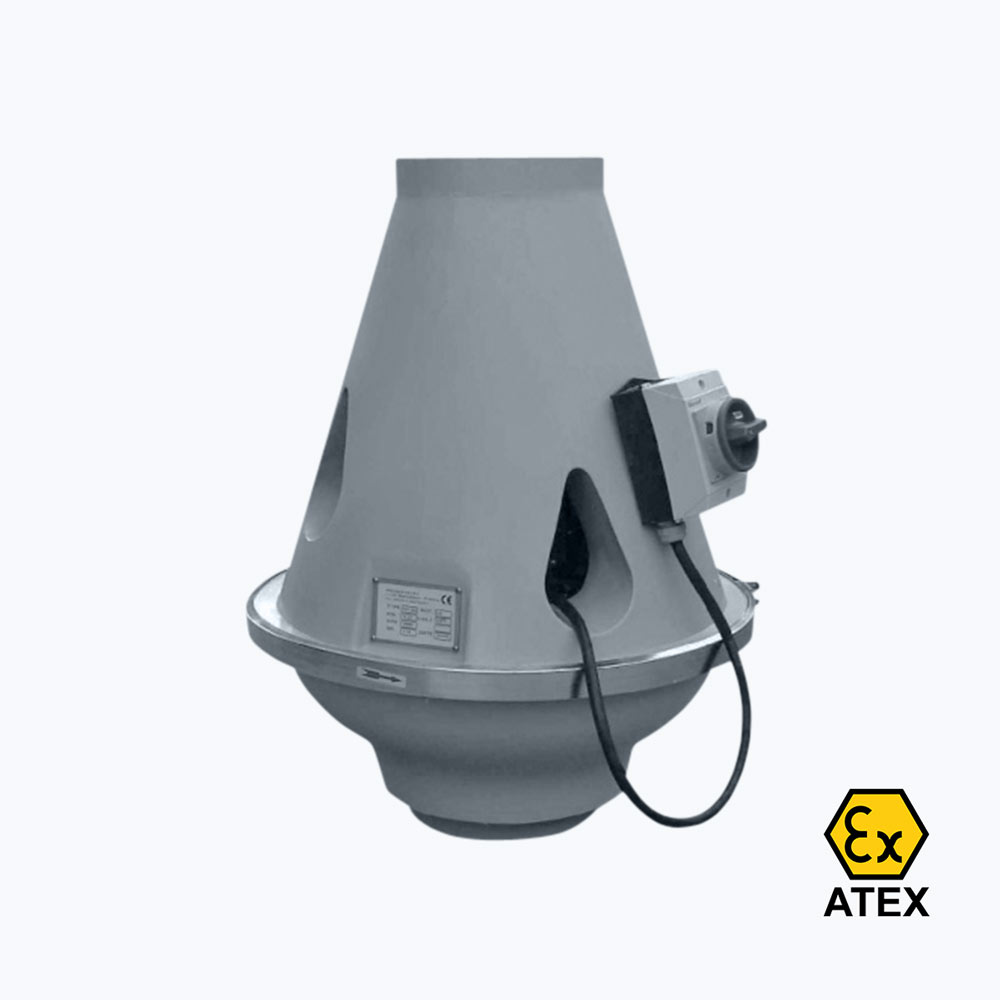
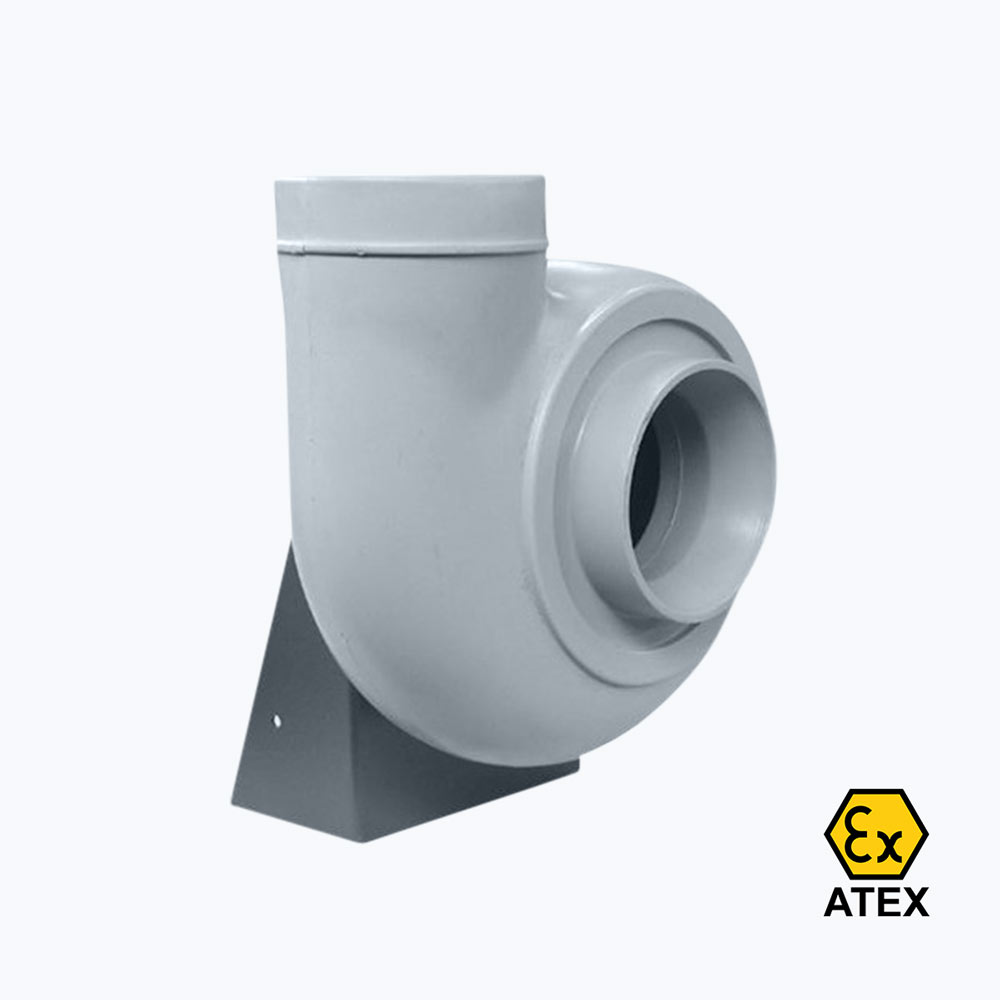
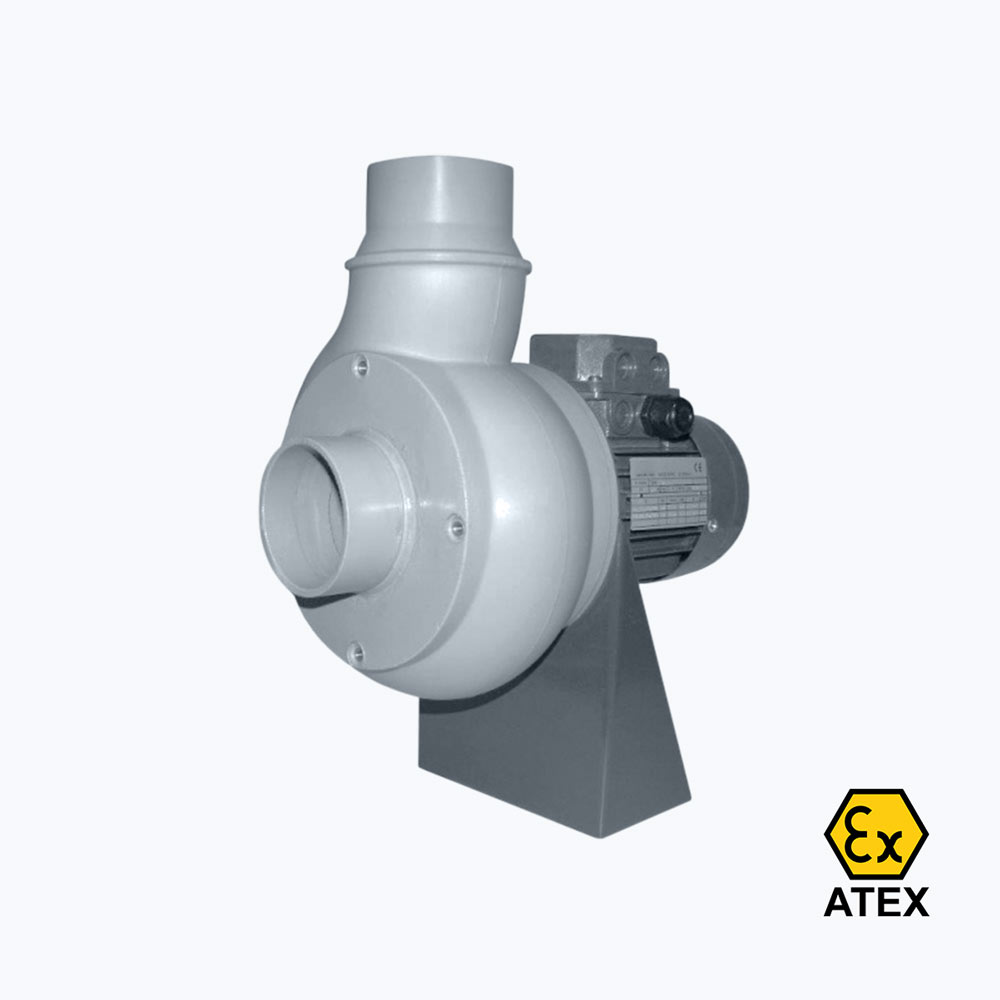
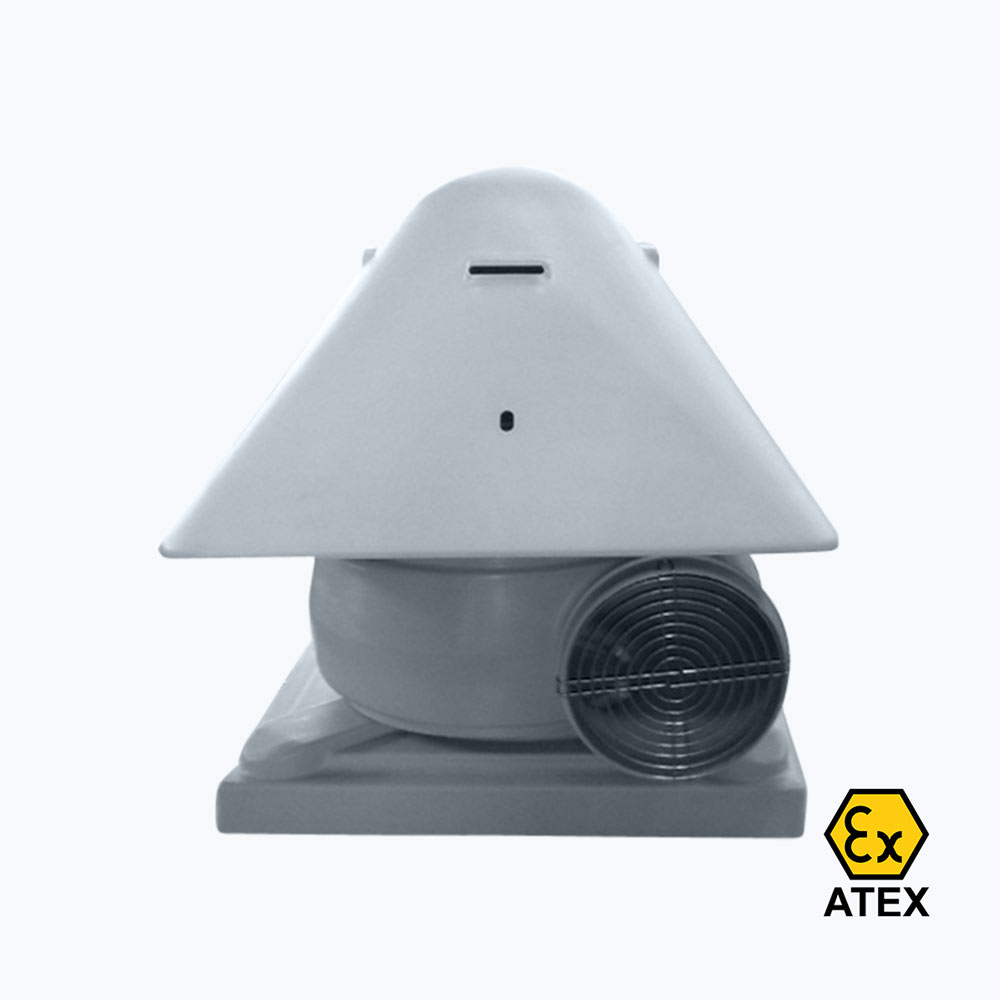
Are you working in an environment where both explosion risks and corrosive substances need to be considered? An ATEX plastic fan can be an effective solution. Plastic fans combine low weight with high resistance to many chemicals and corrosive vapours. In an ATEX configuration, they can be used in industrial environments where explosive atmospheres may occur.
ATEX plastic fans are commonly used for extracting aggressive vapours and gases in the chemical industry, laboratories, electroplating facilities and other processes where corrosive media are present.
The products shown below represent our standard range and are only a selection of the solutions we offer. Every application has different requirements. That’s why we always select and configure the fan to match your application, required airflow, pressure, medium, material requirements and ATEX classification.
Whether you need a standard plastic fan or a specific configuration for a demanding industrial application, our specialists are happy to help you find the right solution.
Need expert advice? Get in touch!
Call us at +31 (0)416 391 999 or email info@ventinet.nl

We’re available Monday to Friday from 8:30 to 17:00.
Plastic is an interesting material for ventilation applications where corrosion resistance is important. While metal components can be affected by aggressive vapours or chemicals, certain plastics offer high resistance to specific corrosive media.
An ATEX plastic fan combines these material properties with a configuration suitable for use in hazardous areas where an explosive atmosphere may occur.
This makes plastic ATEX fans particularly suitable for applications where both chemical exposure and explosion risks need to be taken into account.
Looking for other explosion-proof fan solutions? Explore our complete range of ATEX fans.
ATEX plastic fans are commonly used for:
The most suitable plastic and fan configuration depend on the medium being extracted and the conditions in which the fan will operate.
One of the main advantages of plastic is its resistance to many corrosive substances. This makes a plastic fan a suitable choice when the extracted air contains aggressive vapours or gases.
Material selection is essential. Not every type of plastic is resistant to the same chemicals. That’s why we consider more than just the required airflow and pressure when selecting a fan. Factors such as the composition of the medium, its concentration and temperature also play an important role.
This ensures that the fan material is suitable for the actual operating conditions and contributes to reliable long-term operation.
When a plastic fan is used in a hazardous area, the complete fan configuration must comply with the applicable ATEX classification.
The right fan depends on factors such as:
Would you like to learn more about the different classifications? Read our article about ATEX zones.
Not sure which configuration is suitable? Our specialists can help translate the requirements of your application into the right fan solution.
Plastic fans are not only interesting because of their chemical resistance. Their relatively low weight can also offer advantages in certain mounting and installation situations.
Depending on the application, different plastic materials, capacities and configurations are available. Accessories and other components can also be selected to suit the installation.
Customisation is standard practice at Ventinet. We select and, where necessary, adapt the fan based on your application and the conditions in which it needs to operate.
Different fan technologies are available within the plastic fan range. The most suitable technology depends mainly on the required airflow and pressure.
An ATEX plastic axial fan is suitable when large volumes of air need to be moved at relatively low pressure. An ATEX plastic centrifugal fan is more suitable when higher pressure is required, for example in duct systems, filters or other components with higher resistance.
Based on your duty point and installation requirements, we determine which configuration best suits your application.
For an ATEX plastic fan, the complete configuration must be suitable for the environment in which it will operate. This means looking beyond the material of the fan housing alone.
Factors such as ATEX zone, temperature class, extracted medium, material selection, airflow and pressure all play a role in selecting the right fan.
Would you like to learn more about the regulations? Read our article ATEX fans: The Complete Guide.
Plastic ATEX fans also require regular maintenance. Periodic inspection helps identify contamination, wear or other abnormalities at an early stage.
Important inspection points include:
When handling aggressive media, it is particularly important to regularly check that the fan materials remain in good condition.
For major repairs or modifications, we always recommend contacting us beforehand. This helps ensure that the explosion-proof characteristics of the fan are maintained.
For more information, read our articles about ATEX fan maintenance and EN 14986.
Selecting an ATEX plastic fan involves several technical considerations. The required airflow and pressure are important, but so are the extracted medium, material selection and ATEX classification.
Our specialists are happy to help you select a plastic fan that matches your application, installation and operating conditions.
An ATEX plastic fan is a suitable choice when ventilation is required in a hazardous area and the extracted air contains corrosive or aggressive substances.
Plastic fans are lightweight and can offer high resistance to many corrosive substances. The most suitable plastic depends on the medium and operating conditions.
No. A specific ATEX configuration is required for use in a hazardous area. The appropriate configuration depends on factors such as the ATEX zone and extracted medium.
The material depends on the application. Factors such as the extracted medium, concentration and temperature determine which material is suitable.
Yes. In addition to our standard range, we supply customised fan solutions tailored to the specific requirements of your application.
An axial fan is mainly suitable for moving large air volumes at relatively low pressure. A centrifugal fan is better suited to applications requiring higher pressure.
Since 1999, we have been helping companies find the right industrial fan for their application. Over the years, we have sold and delivered more than 175,000 fans to customers in more than 71 countries. With a range of over 30,000 products, we offer a wide variety of ventilation solutions. And because no installation or application is the same, we are also happy to help when a standard solution does not meet your requirements.
Custom solutions are standard for us too. Whether you need specific dimensions, materials, performance or other specifications, we can work with you to find a suitable solution when an existing fan does not meet your requirements. Thanks to our technical expertise and years of experience in industrial ventilation, we can quickly switch between standard and custom solutions. This allows us to help installers, machine builders, OEMs and end users worldwide find an industrial fan that fits their application.