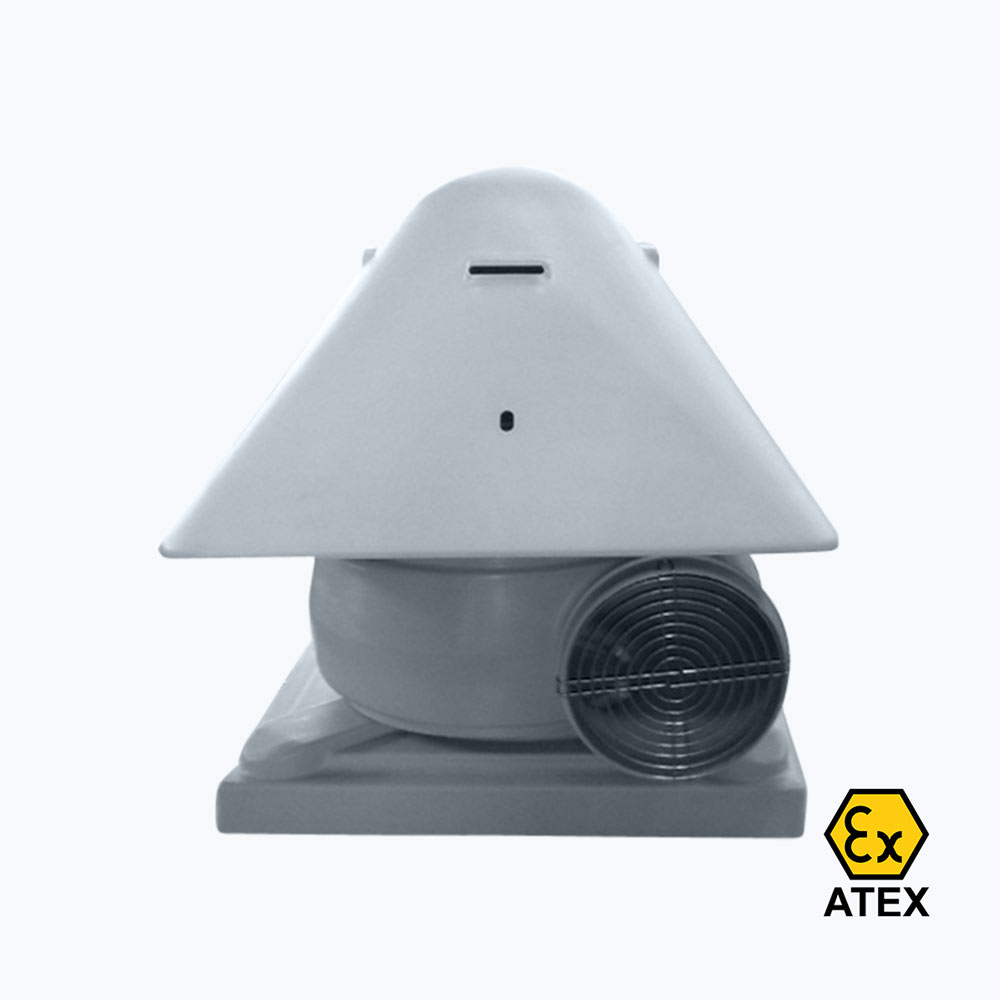
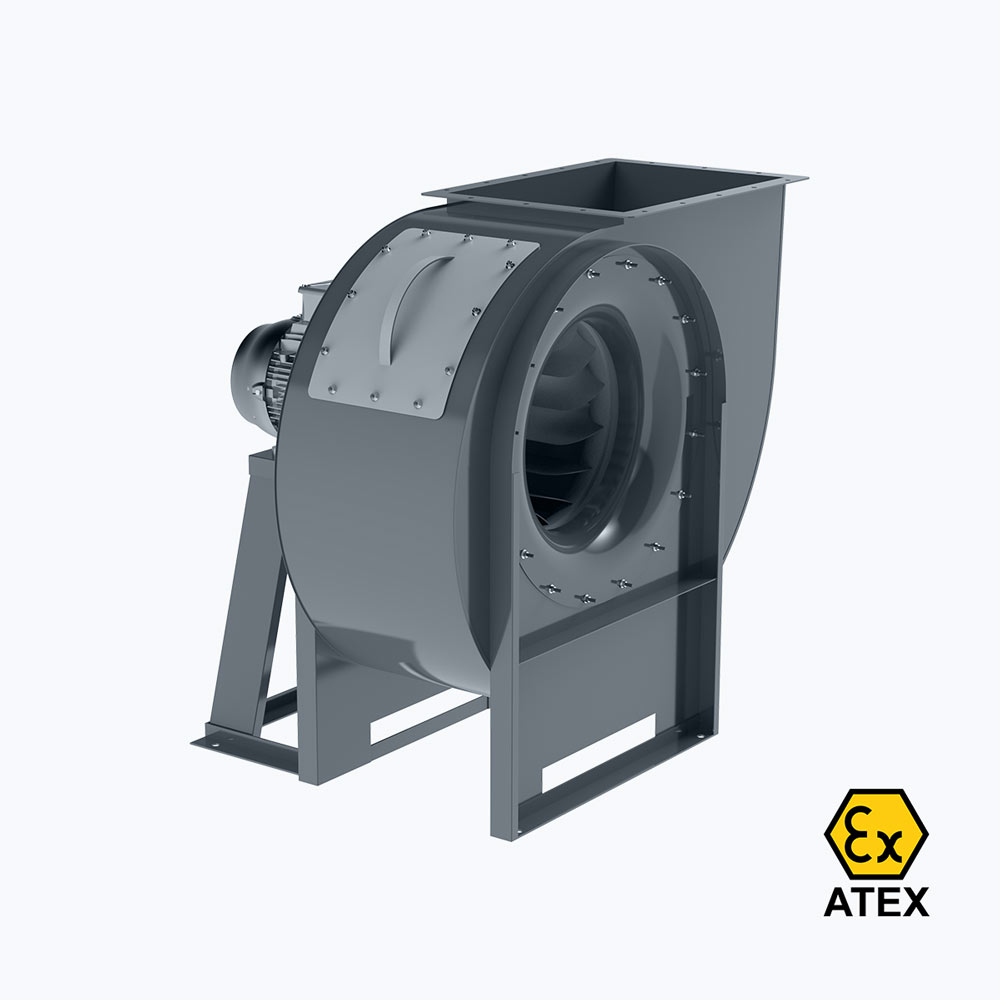
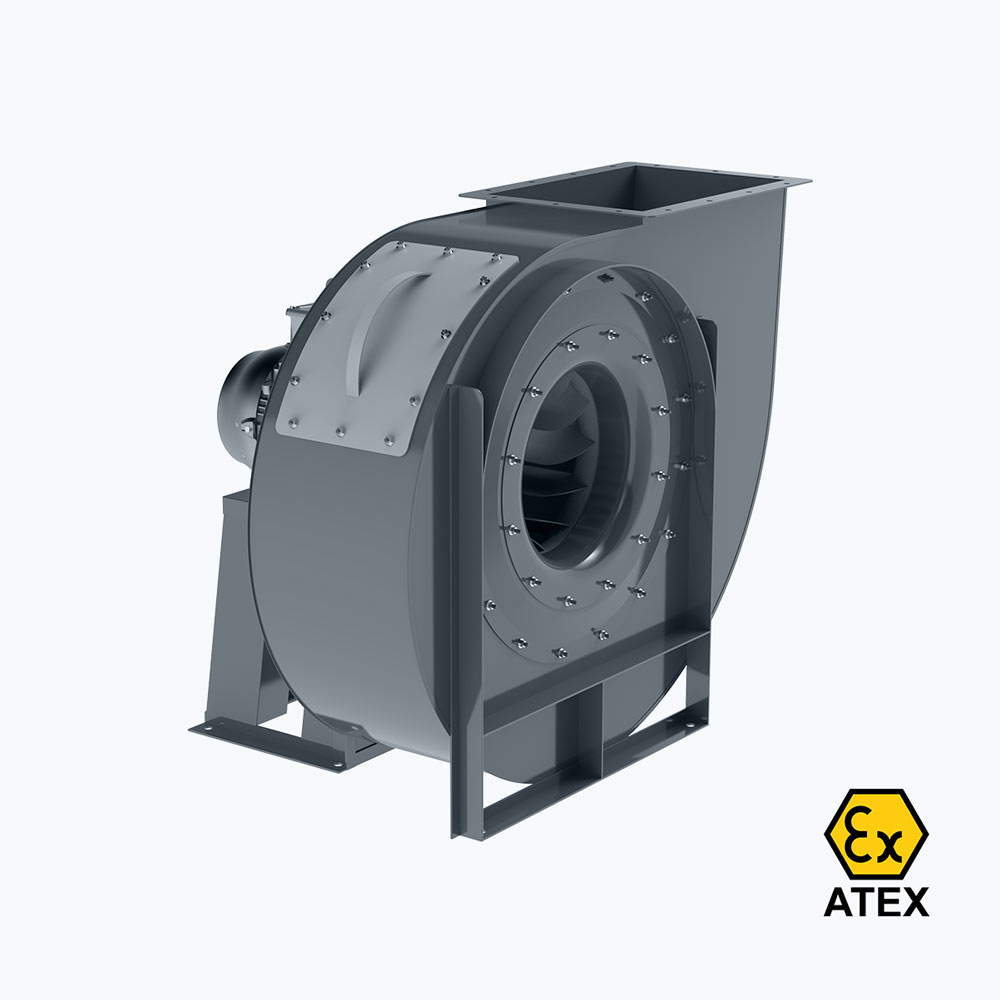
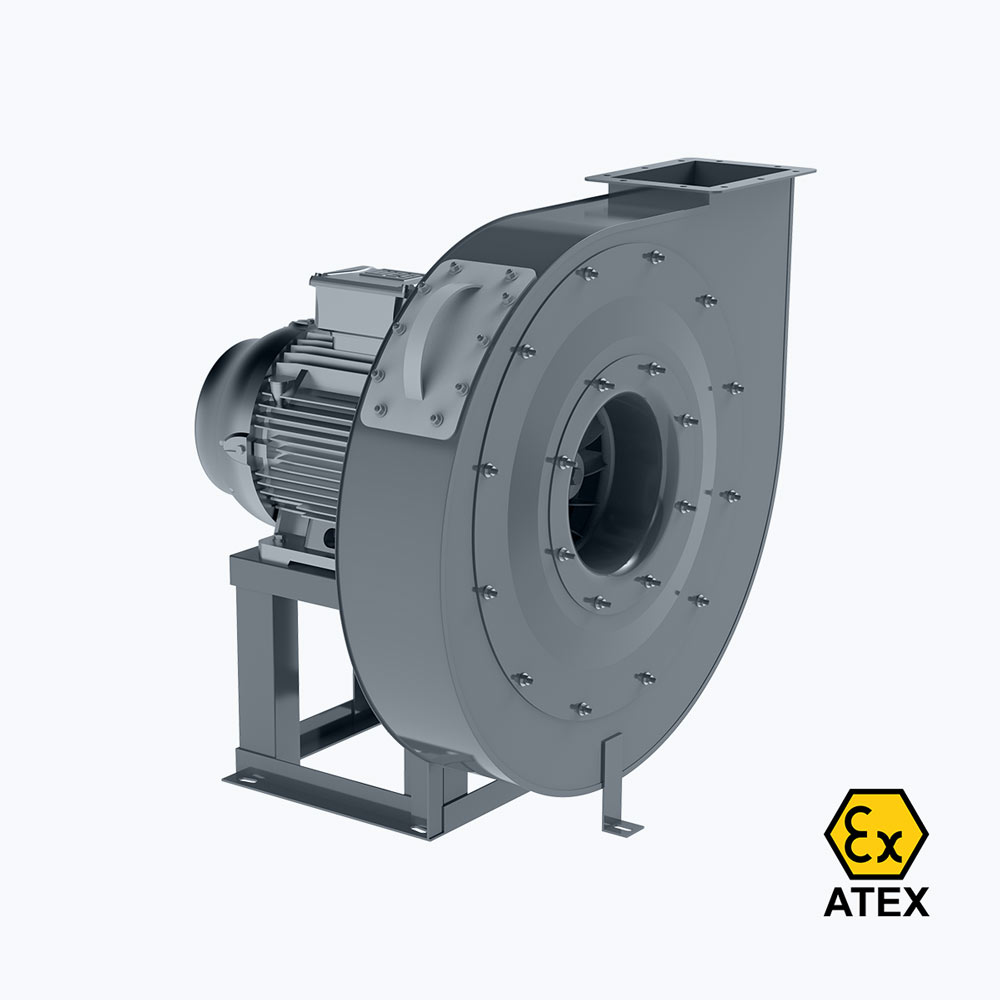
When air needs to be moved in a hazardous area while overcoming higher system resistance, an ATEX centrifugal fan is often the best solution. These fans are specifically designed for applications where air must be transported through ductwork, filters, heat exchangers or other system components without compromising safety.
ATEX centrifugal fans are designed for use in environments where flammable gases, vapours or combustible dust may create an explosive atmosphere. Their explosion-proof construction complies with the applicable ATEX requirements, making them suitable for a wide range of industrial applications.
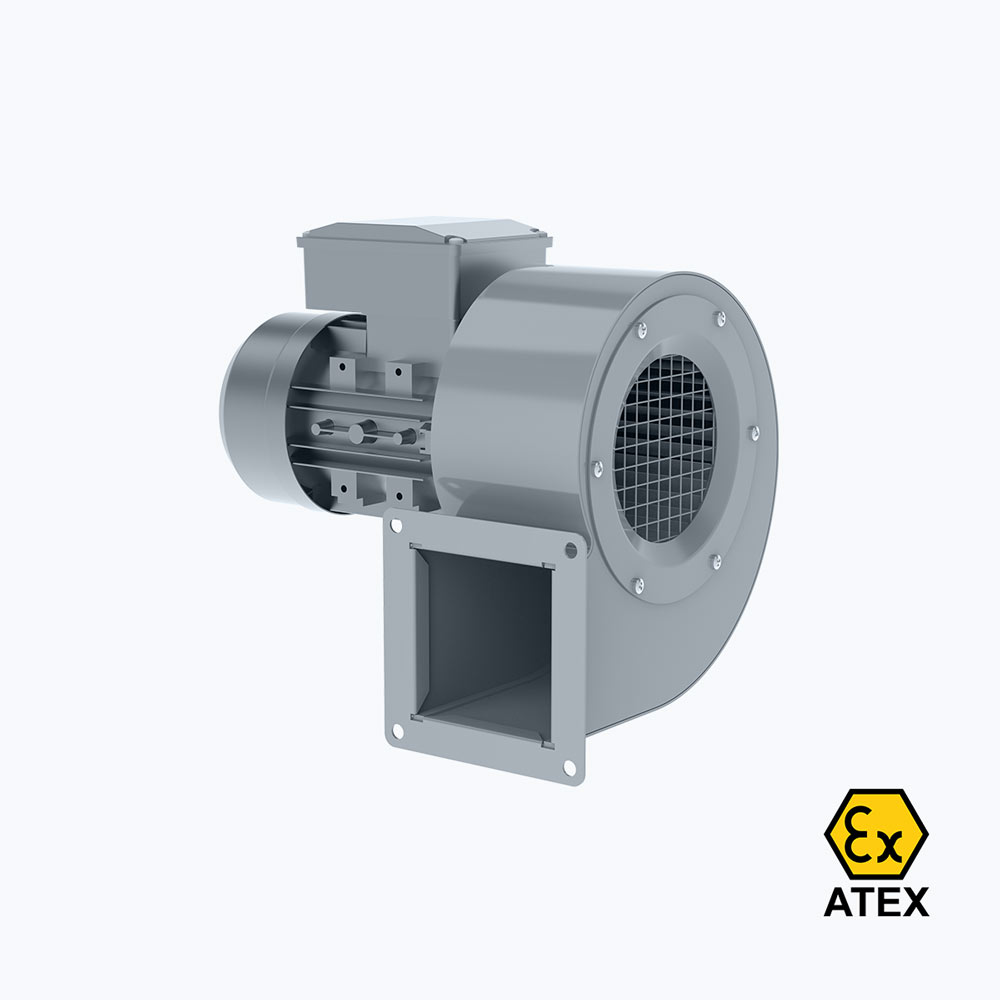
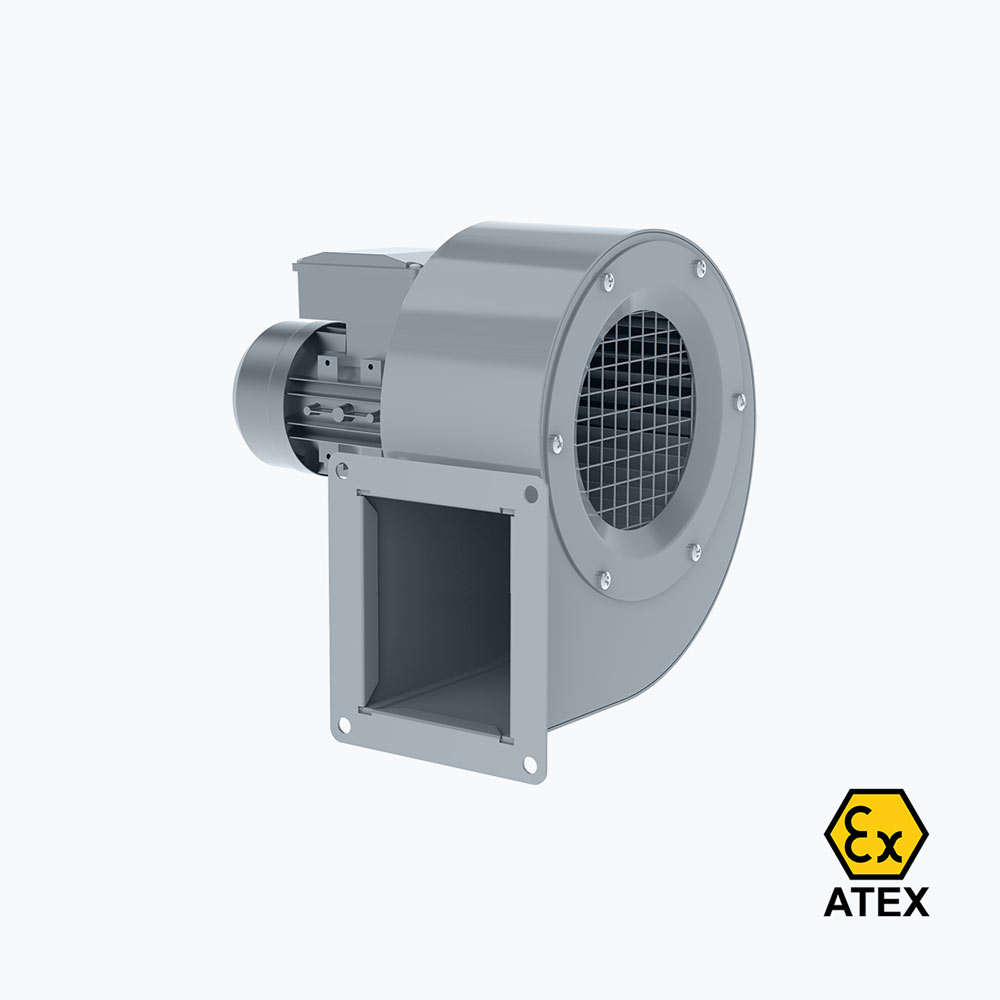
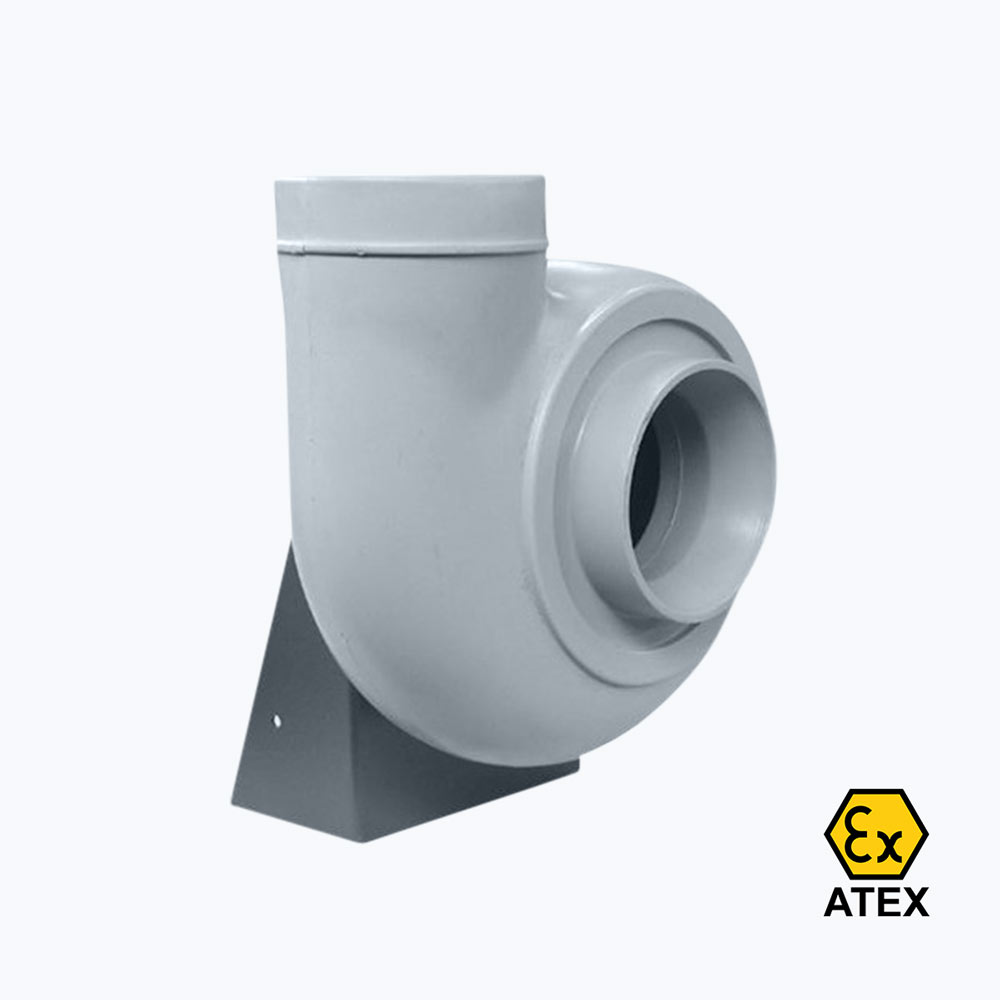
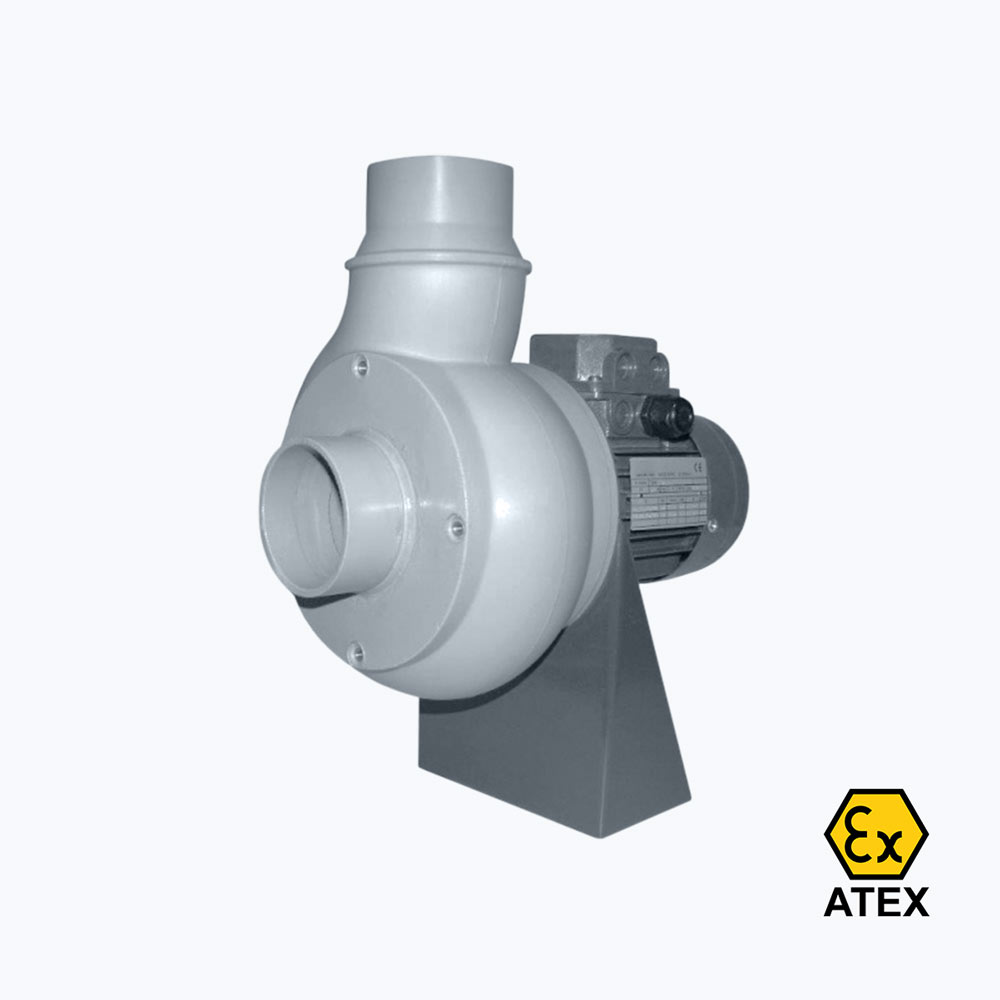
The products shown below represent our standard range and are only a selection of the solutions we offer. Every application is different, which is why we always select and configure the fan to match your specific requirements, including the required airflow, static pressure, installation conditions and ATEX classification. This ensures you receive a fan that is both safe and optimised for your process.
Whether you require a standard model or a fully customised solution, our specialists are happy to help you find the right ATEX centrifugal fan.
Need expert advice? Get in touch!
Call us at +31 (0)416 391 999 or email info@ventinet.nl

We’re available Monday to Friday from 8:30 to 17:00.
Unlike an axial fan, a centrifugal fan draws air into the impeller and discharges it at a 90-degree angle. This design enables the fan to generate significantly higher static pressure, making it ideal for systems where air has to overcome resistance.
Typical examples include installations with long duct systems, dust collectors, filters, scrubbers, heat exchangers or other process equipment. In these applications, a centrifugal fan often delivers better performance than an axial fan.
When these systems operate in hazardous areas, an ATEX-certified fan is essential to minimise the risk of ignition and ensure safe operation.
If your application mainly requires high airflow with relatively low pressure, our ATEX axial fans may be a better solution.
ATEX centrifugaal ventilatoren worden onder andere toegepast in:
Door de hogere drukopbouw zijn centrifugaal ventilatoren bijzonder geschikt voor complexe ventilatiesystemen waarbij meerdere componenten weerstand veroorzaken.
Every hazardous area has its own requirements. That’s why our ATEX centrifugal fans are available in configurations suitable for different gas and dust zones.
When selecting the right fan, we consider factors such as:
Not sure which configuration is required? Read more about ATEX zones or contact our specialists for technical advice.
No two installations are exactly alike. That’s why, in addition to our standard product range, we also supply fully customised ATEX centrifugal fans.
Depending on your application, fans can be supplied with different impeller designs, construction materials, motor configurations and protective coatings. We also offer a wide range of accessories, including anti-vibration mounts, flexible connectors and inspection doors.
This allows us to deliver a fan that perfectly matches your installation, operating conditions and ATEX classification.
Choosing an ATEX centrifugal fan involves much more than selecting the required airflow. The complete fan configuration must be suitable for the hazardous environment in which it will operate.
Our engineers take into account not only airflow and pressure, but also the explosion zone, temperature class, operating conditions and overall system design. This ensures reliable performance and safe operation throughout the fan’s service life.
Would you like to learn more about the regulations? Read our article ATEX fans: The Complete Guide.
Regular maintenance is essential to maintain both safety and performance. During inspections, particular attention should be paid to:
For major repairs or modifications, we always recommend contacting us beforehand. This helps ensure that the explosion-proof characteristics of the fan are maintained.
For more information, read our articles about ATEX fan maintenance and EN 14986.
Selecting the right ATEX centrifugal fan requires more than simply determining the required airflow. Static pressure, installation layout, hazardous area classification and operating conditions all play an important role.
Our specialists are happy to help you select the most suitable solution for your application, ensuring safe, reliable and efficient operation.
Choose an ATEX centrifugal fan when your application requires higher static pressure in a hazardous area, for example in duct systems, filtration units, scrubbers or industrial process installations.
A centrifugal fan is designed to generate higher static pressure, while an axial fan is better suited for moving large volumes of air at relatively low pressure.
These fans are commonly used in the chemical, petrochemical, pharmaceutical, food processing and process industries, as well as in dust extraction and solvent extraction systems.
Yes. We can customise the fan’s dimensions, materials, impeller design, motor configuration, coatings and accessories to suit your specific application.
Yes. Periodic inspection and maintenance are essential to ensure safe operation, reliable performance and a long service life.